
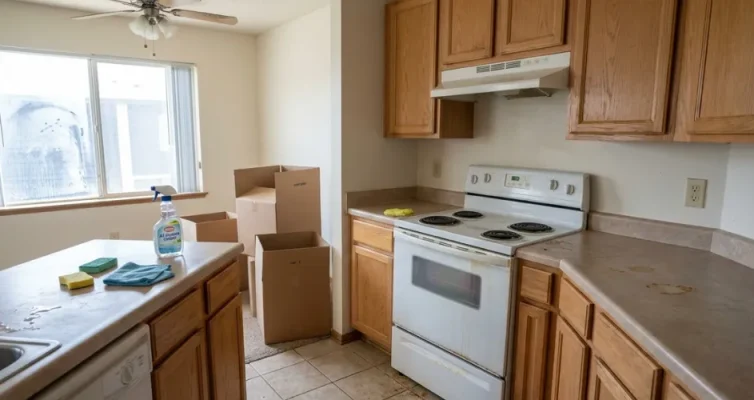
You packed the last box, wiped the counters, and vacuumed the floors. The place looks clean enough. Then the landlord walks in, runs a finger along the top of the door frame, and pulls out a clipboard. That is when your security deposit starts disappearing.
Most tenants assume DIY move out cleaning will save money and pass inspection easily. But landlords do not check for “looks clean from the doorway.” They check inside the oven, behind the toilet, and under the refrigerator. A quick tidy up rarely meets cleaning standards for rental homes, and those missed spots add up fast.
So what actually happens when you clean before moving out without a real plan? This guide breaks down the seven most common reasons why DIY move out cleaning often fails to get deposit back, plus exactly how to avoid each mistake.
What Landlords Actually Look For During a Move Out Inspection
Here is where most DIY efforts go wrong. You think “clean” means no visible dust. Your landlord thinks “clean” means eating off the floor inside the oven. The gap between those two versions is where your deposit goes to die.
What landlords look for in move out cleaning is not the same as your weekly wipe down. Property managers use a detailed checklist that covers every surface, visible or not. They have seen every trick. They know where dust hides. And they will find it.
On top of that, inspectors also check for odors. Pet smells, cigarette smoke, and musty basements. Even if everything looks clean, a lingering odor can trigger a deduction. That is what landlords look for in move out cleaning beyond just the visible dirt.
Now that you know what inspectors actually check, let us walk through the seven reasons DIY efforts fall short.
Reason 1: Rushing the Job and Running Out of Time
Most tenants leave the cleaning for the final 24 hours. Bad idea. A rushed job means you clean what is at eye level and ignore everything else. The tops of cabinets? Skipped. Inside the oven? Forgotten. Behind the toilet? Not a chance.
Here is the reality. A one bedroom apartment takes 4 to 6 hours to clean properly. A two bedroom house? Plan for 6 to 8 hours. A large family home can take a full day or more. This is exactly why cleaning before moving out needs to start early, not end late. If you wait until the truck is loaded and the keys are due, you will rush. And rushing is the fastest way to fail an inspection.
The fix is simple. Block out a full day on your calendar before moving day. No packing, no errands, just cleaning. Start in the morning. Work room by room. And give yourself permission to take breaks. A tired cleaner misses more than a rested one.
Reason 2: Underestimating Landlord Standards
You vacuumed, wiped the counters, and even mopped. In your world, the place is clean. But your landlord is not living in your world. They are comparing your home to a hotel room that has never been slept in.
Common mistakes in DIY move out cleaning start with this exact gap. A quick surface clean feels productive, but inspectors look for things you cannot see from standing height. Grease on top of the kitchen cabinets, dust on ceiling fan blades, and soap scum in the corners of the shower where water does not hit.
The fix? Change your standard. Do not ask “does this look clean?” Ask “would I eat off this surface?” For landlords, that is the real bar. A vacuum and a sponge are not enough. You need a scrub brush, a microfiber cloth, and the patience to clean every single inch.
Reason 3: Missing Hidden and Hard to Reach Spots
You wiped the counter. You cleaned the mirror. But did you check the top of the refrigerator? What about inside the range hood? Landlords know exactly where renters cut corners, and they go straight to those spots first.
Hidden areas people miss during move out cleaning include ceiling fans, vent covers, door frames, behind toilets, cabinet tops, window tracks, baseboards, light fixtures, and closet shelves. These zones collect dust and grime for months or years. A quick wipe will not touch them.
Missed cleaning spots in house fall into three categories. Overhead spots like fans and light fixtures. Floor level spots like baseboards and under appliances. And inside spots like cabinets, drawers, and oven interiors. Each category needs its own cleaning method. A duster for overhead. A scrub brush for floors. A degreaser for inside the oven.
Here is a simple rule. If you have to stretch, bend, or open something to reach it, that is exactly where the inspector will look.
Reason 4: Ignoring Appliance Interiors
The outside of your oven looks spotless. The landlord opens the door and finds last year’s lasagna baked onto the bottom. That is a deduction.
Here is what inspectors check inside each appliance.
| Appliance | What they inspect |
| Oven | Racks, bottom, walls, door glass, drip pans |
| Refrigerator | Shelves, drawers, door bins, freezer, rubber seals |
| Microwave | Turntable, ceiling, vents, door edges |
| Dishwasher | Filter, spray arms, door seal, interior walls |
| Range hood | Grease filters, fan blades, underside |
What happens if move out cleaning is not done properly on appliances? The landlord hires a cleaner and sends you the bill. Oven cleaning alone can cost $50 to $100. A full appliance deep clean runs $150 or more. That comes straight out of your deposit.
The fix is straightforward. Start appliances early. Run the oven’s self clean cycle 24 hours before you plan to scrub it. Soak oven racks in hot water with dish soap overnight. Wipe refrigerator shelves with warm water and baking soda. Run an empty dishwasher cycle with a cup of white vinegar on the top rack.
Do not just wipe the outside. Open every door, every drawer, every compartment. If food has touched it, clean it.
Reason 5: Using the Wrong Cleaning Products
You grab the all purpose spray, a sponge, and get to work. Seems fine. But that same spray that works on your counter can ruin your hardwood floors or leave streaks on your stainless steel fridge. You clean your home one way for weekly upkeep. A move out clean needs a different approach.
Harsh chemicals damage delicate surfaces. Abrasive scrubbers scratch glass and stainless steel. Too much water warps laminate flooring. And basic cleaners cannot touch baked on grease or hard water stains. How do you clean up after a year of cooking without the right tools? You do not. You just push the grime around.
Professional move out cleaning vs DIY cleaning comparison starts with products. Pros carry degreasers for ovens, descalers for bathrooms, and pH neutral cleaners for floors. They know that vinegar works on hard water but ruins stone countertops. They know bleach kills mold but damages grout if left too long.
The fix is simple but requires a small investment. Buy these items before you start.
- Degreaser for kitchen appliances and range hoods
- Descaler or lime remover for bathrooms
- Glass cleaner without ammonia for mirrors and windows
- Microfiber cloths (no paper towels, they leave lint)
- Soft scrub brush for grout and tile
- Magic eraser for scuff marks on walls
Test every product on a small hidden area first. What works on white tile might strip color from natural stone. And never mix chemicals. Bleach plus ammonia creates toxic gas. A damaged surface costs more to replace than the cleaning product you were trying to save money on.
Reason 6: Forgetting Walls, Light Switches, and Cabinet Interiors
You scrubbed the floors and wiped the counters. But the landlord just ran a finger across the top of your kitchen cabinet and found dust from 2019. That is the problem. People clean at eye level and call it done.
Here is what actually needs attention in every room.
Walls and Light Switches
Scuff marks from furniture. Greasy fingerprints near light switches. Crayon marks if you had kids. Food splatters near the dining area. These small marks make an entire room look dirty, even if the floor is spotless. A magic eraser handles most of them. For tougher spots, warm water with a drop of dish soap works fine. Do not repaint unless the lease requires it. Just clean.
Cabinet Interiors
So clean the house, clear the drawers, mop the floors, stand tall is a nice goal. But you also need to open the drawers. Landlords check inside every cabinet, every drawer, every shelf. Crumbs, hair, dust, and sticky residue from cleaning products all count against you. Empty everything. Wipe with a damp cloth. Let dry completely before closing.
Doors, Frames, and Baseboards
The top edges of doors collect dust. Door frames have handprints. Baseboards have shoe scuffs and vacuum marks. These are not hard to clean, but they are easy to forget because nobody looks at them during daily life. An inspector does.
The fix is a second pass. After you finish the main areas, walk through every room again at waist level and floor level. Touch every surface. If your finger comes back dirty, clean it.
Why tenants lose deposit after cleaning their own house often comes down to these small misses. A greasy light switch plate. A dusty door frame. A crumb in a drawer. None of them are expensive to fix individually. Together, they tell the landlord that you rushed. And a rushed cleaner is an unreliable tenant in their eyes.
Reason 7: Cleaning Without a Checklist
You walk into an empty apartment with a bottle of spray and good intentions. Three hours later, you have cleaned the kitchen twice and completely forgot the bathroom exists. That is what happens without a plan.
A move out cleaning checklist keeps you organized room by room. It prevents the “did I already do that?” panic. And it gives you proof that every surface got attention before the landlord arrived.
Here is a simple room by room checklist you can use.
Kitchen
- Oven interior, racks, and door glass
- Refrigerator shelves, drawers, and seals
- Microwave turntable, ceiling, and vents
- Dishwasher filter and door seal
- Cabinet interiors and drawer tracks
- Range hood filters and grease traps
- Countertops, backsplash, and sink
- Behind and under appliances
Bathroom
- Shower walls, floor, door, and fixtures
- Tub interior and jets if applicable
- Toilet inside bowl, behind seat, and base
- Vanity drawers, under sink, and mirror
- Grout lines and caulking
- Exhaust fan cover and vent
Living areas and bedrooms
- Walls for scuffs, marks, and nail holes
- Baseboards and door frames
- Light switches and outlet covers
- Ceiling fans and light fixtures
- Window sills, tracks, and glass
- Closet shelves, rods, and floors
- Floor edges and corners
Cleaning routine matters less than having a system. Start at the top of each room and work down. Ceiling first, then walls, then floors. Dust before you vacuum. Clean dry surfaces before wet ones. And check every item off your list as you go.
Is Hiring a Cleaner Worth it For Move Out?
If your time is worth more than the service fee, yes. If you have a large home or heavy buildup, yes. If you want zero stress on moving day, absolutely. A Move out cleaning company handles everything on this list and more. But if you go DIY, at least use the checklist. Guessing is how you lose your deposit.
Let the Pros Handle It
Not everyone has time to scrub baseboards at midnight and that is where Mya Cleaning Services comes in. We specialize in Move In and Move Out Cleaning Services so your home looks as spotless the day you leave as the day you arrived. One less thing to worry about on moving day.
Frequently Asked Questions
- Is DIY move-out cleaning enough to get a security deposit back?
Not always. Most landlords expect deep cleaning of hidden areas that DIY cleaning often misses.
- What do landlords check during a move-out inspection?
They check appliances, bathrooms, baseboards, inside cabinets, and hidden dust or stains.
- What are the most commonly missed areas in move-out cleaning?
Behind appliances, ceiling fans, door frames, baseboards, and inside ovens and drawers.
- Why do tenants lose their deposit after cleaning?
Because of missed spots, poor deep cleaning, or not meeting landlord cleanliness standards.
- Is hiring professional move-out cleaners worth it?
Yes, especially for large homes or strict inspections, as it reduces the risk of deductions.

